
The UK Government’s new Representation of the People Bill is set to transform the way the UK votes. Toby S. James draws attention to a move towards automatic voter registration and puts forward recommendations for how those proposals could be improved and strengthen democracy. Major Bills to change how elections are important moments in the evolution of…Read more How the Representation of the People Bill can be amended to strengthen democracy
elections

Voting in supermarkets, bank cards as ID and £500,000 fines for breaking the rules – how British elections could be about to change
Originally published on The Conversation Elections need periodic reform to ensure that they have integrity and fulfil their role in line with the times, and the British government has unveiled its proposals for doing just that. Britain was widely regarded as one of the pioneers of such democratic electoral reforms. In the late 19th and…Read more Voting in supermarkets, bank cards as ID and £500,000 fines for breaking the rules – how British elections could be about to change

Billions voted in 2024, but Electoral Integrity Project exposes cracks in global democracy
by Toby S. James, Holly Ann Garnett, and Sofia Caal-Lam The Global Electoral Report 2025 has been published and raises concerns about the state of democracy around the world during 2024’s ‘Super Cycle’ of elections. Described by Time Magazine as the ‘Year of Elections’, 2024 saw 1.6 billion people head to the polls across 74…Read more Billions voted in 2024, but Electoral Integrity Project exposes cracks in global democracy
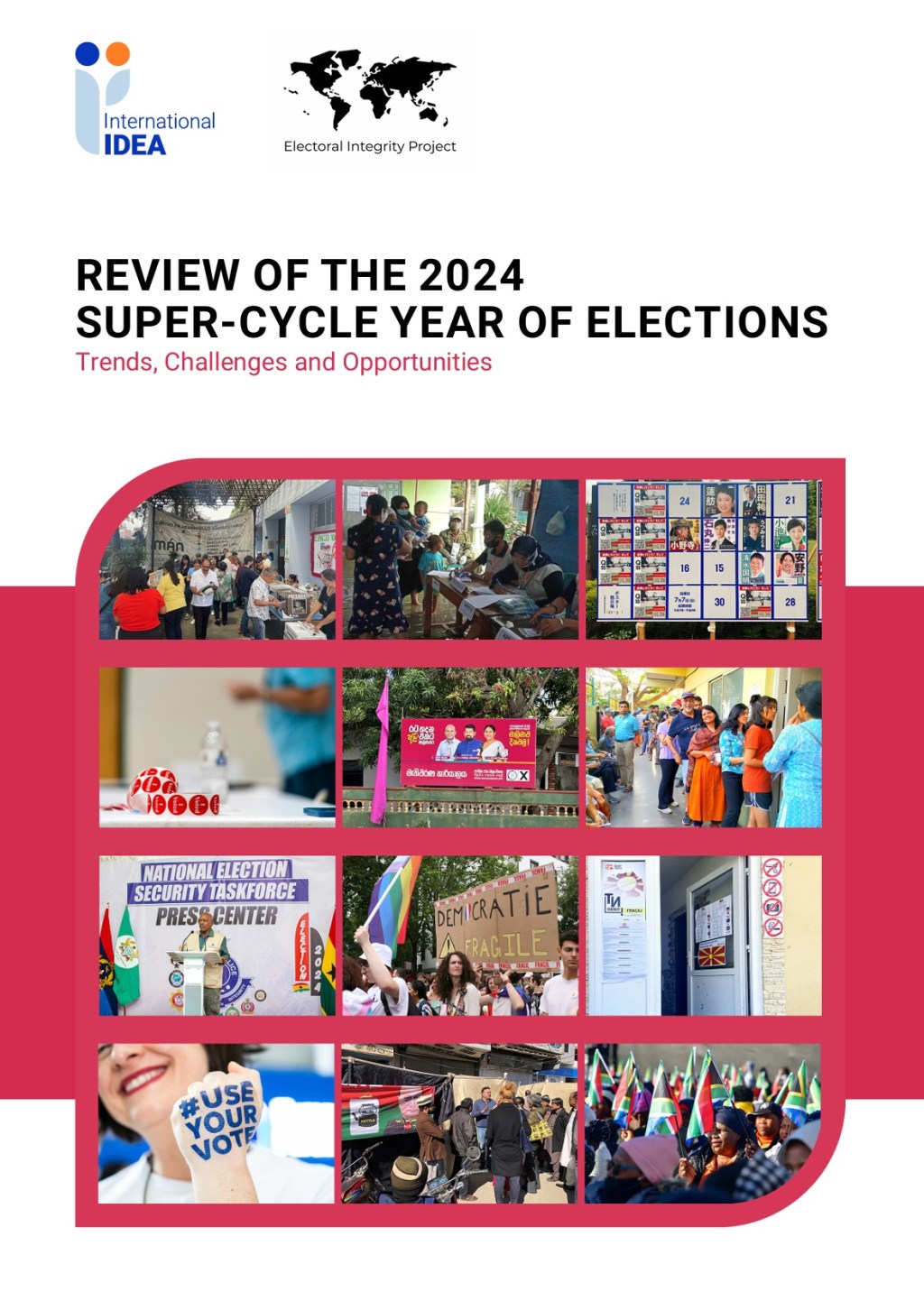
Electoral Integrity-IDEA report on ‘Review of the 2024 Super-Cycle Year of Elections’ calls for global action
The Electoral Integrity Project collaborated with International IDEA to publish a special report on “Review of the 2024 Super-Cycle Year of Elections: Trends, Challenges and Opportunities”. I edited report alongside Holly Ann Garnett and Erik Asplund. It included chapters from myself, Vasil Vashchanka, Gudlaug Olafsdottir, Julia Thalin, Ingrid Bicu, Sonali Campion, Erik Asplund, Madeline Harty…Read more Electoral Integrity-IDEA report on ‘Review of the 2024 Super-Cycle Year of Elections’ calls for global action

Electoral Reform: Democratic Principles and Global Practice
Election quality varies enormously around the world. Given concerns about global democratic backsliding, the issue of how to improve and protect election quality is a pressing policy problem. Passing reforms to improve the quality of elections, however, has often proved difficult to achieve. Incumbent governments may be reluctant to reform the rules which brought them…Read more Electoral Reform: Democratic Principles and Global Practice

Half the world will vote in 2024, but how many elections will be fair?
This blog post with Holly Ann Garnett, was first published on The Conversation. This year has been widely proclaimed to be the year of elections, with national elections expected in at least 64 countries. This means that half of the world’s population will have the opportunity to change their government, choose their representatives and indirectly…Read more Half the world will vote in 2024, but how many elections will be fair?

An alternative to rational choice theory (and constructivism)
Rational choice theory has been the go-to theory for scholars of elections for many years. It sees voters, parties and other actors as rational, self-interested actors. They are involved in cost-benefit calculations to maximise their 'utility' (usually votes or the policies they want). It could be said that the theory is a bit like Marmite. Some love it,…Read more An alternative to rational choice theory (and constructivism)
Global Electoral Integrity Report 2023 published
The new report from the Electoral Integrity Project has reported that election quality has held steady around the world – and increased in many countries. There have been widespread concerns about democratic backsliding around the world with the US launching a Summit for Democracy, asking countries to make commitments to support democratic reform. The Electoral…Read more Global Electoral Integrity Report 2023 published
Automatic voter registration is the key for better registers, new article shows
Voter registration reform is being discussed in many countries. What improves register quality? Holly Ann Garnett and I evaluate electoral register quality in 159 countries in a new research paper. We find that automatic voter registration ('AVR') improves *both* completeness and accuracy. This is significant because many contemporary debates suggest that there is often a…Read more Automatic voter registration is the key for better registers, new article shows
Labour announces good news for British elections?
Voter registration is a problem in the UK. Approximately one in five citizens are not on the electoral register. When it is reported that only 65% of registered people voted at the 2010 general election, we forget those people who are not on the register in the first place.The Guardian is today reporting that Labour…Read more Labour announces good news for British elections?
 Toby S. James